_edited.png)
Sushi Craftsmanship Techniques That Matter

A remarkable piece of sushi rarely announces itself with excess. It arrives with quiet confidence - the rice still slightly warm, the fish cut with intention, the balance so precise that the first bite feels effortless. That is the beauty of sushi craftsmanship techniques. They are not there to impress through showmanship alone, but to create harmony between texture, temperature, aroma, and timing.
For diners who seek more than a meal, understanding that craftsmanship adds a deeper kind of pleasure to the table. You notice why one nigiri feels delicate while another feels commanding. You taste why the rice matters as much as the fish. And you begin to see sushi not as a simple composition, but as a discipline shaped by restraint, instinct, and years of refinement.
What sushi craftsmanship techniques really involve
At a distance, sushi can look minimal. A slice of fish over rice. A roll cut into even rounds. A brush of nikiri across a glossy surface. Yet true craft lives inside decisions most guests never fully see.
It begins with proportion. The size of the rice mound, the thickness of the cut, the pressure of the hand, and the temperature at the moment of service all influence the final experience. A beautiful ingredient can still feel flat if the rice is packed too tightly or served too cold. Likewise, a modest cut can become extraordinary when shaped and seasoned with precision.
This is what makes sushi craftsmanship techniques so compelling. They are technical, certainly, but they are also deeply sensory. They ask the chef to respond not only to ingredient quality, but to humidity, freshness, fat content, and even the pace of the meal. The best sushi is exacting without ever feeling rigid.
Rice is the first signature
Guests often focus on the fish first, which is understandable. It is visually striking, often luxurious, and central to the identity of the dish. But sushi rice is where the chef’s signature becomes unmistakable.
The rice must be cooked so each grain keeps its shape while still holding together. Seasoning is equally delicate. Vinegar, salt, and sweetness need balance rather than dominance. Too much acidity and the fish loses its voice. Too little, and the bite lacks lift.
Temperature matters just as much. Rice served refrigerator-cold can mute flavor and harden texture. Slight warmth brings softness and aromatic depth, allowing the fish to settle into the rice rather than sit apart from it. In a refined dining setting, that small distinction can change the entire impression of a course.
There is also the matter of hand feel. Rice should hold long enough to reach the guest, then loosen almost immediately on the palate. That takes judgment, not just training. Pressure that is too firm creates density. Pressure that is too light causes collapse. The sweet spot is brief, subtle, and surprisingly difficult to achieve consistently.
Why seasoning is never one-size-fits-all
Different fish call for different approaches. A richer cut may benefit from brighter rice. A leaner fish may need gentler seasoning so its clean mineral character remains intact. This is one of the quiet trade-offs within sushi craft. Consistency matters, but adaptability matters more.
Knife work shapes texture before flavor arrives
Before a piece of sushi is ever tasted, it is already being felt. Knife work determines that first sensation.
A clean cut preserves structure and shine. It allows the fish to meet the tongue smoothly, without ragged edges or unnecessary resistance. But knife technique is not only about neatness. It also changes how the fish eats. A slice cut against the grain can feel softer. A scored surface can create tenderness in a firmer fish. A thicker cut may emphasize richness, while a thinner cut can make the same ingredient feel more elegant.
The angle matters too. In nigiri, the fish should drape with intention, not slump carelessly over the rice. That shape affects how the bite lands and how the topping and rice separate or combine in motion. In sashimi, the knife reveals purity more directly. There is nothing to hide behind, so every decision becomes visible.
For diners, this is where luxury becomes tactile. You do not merely taste quality. You experience the chef’s discipline through texture.
The hand-formed art of nigiri
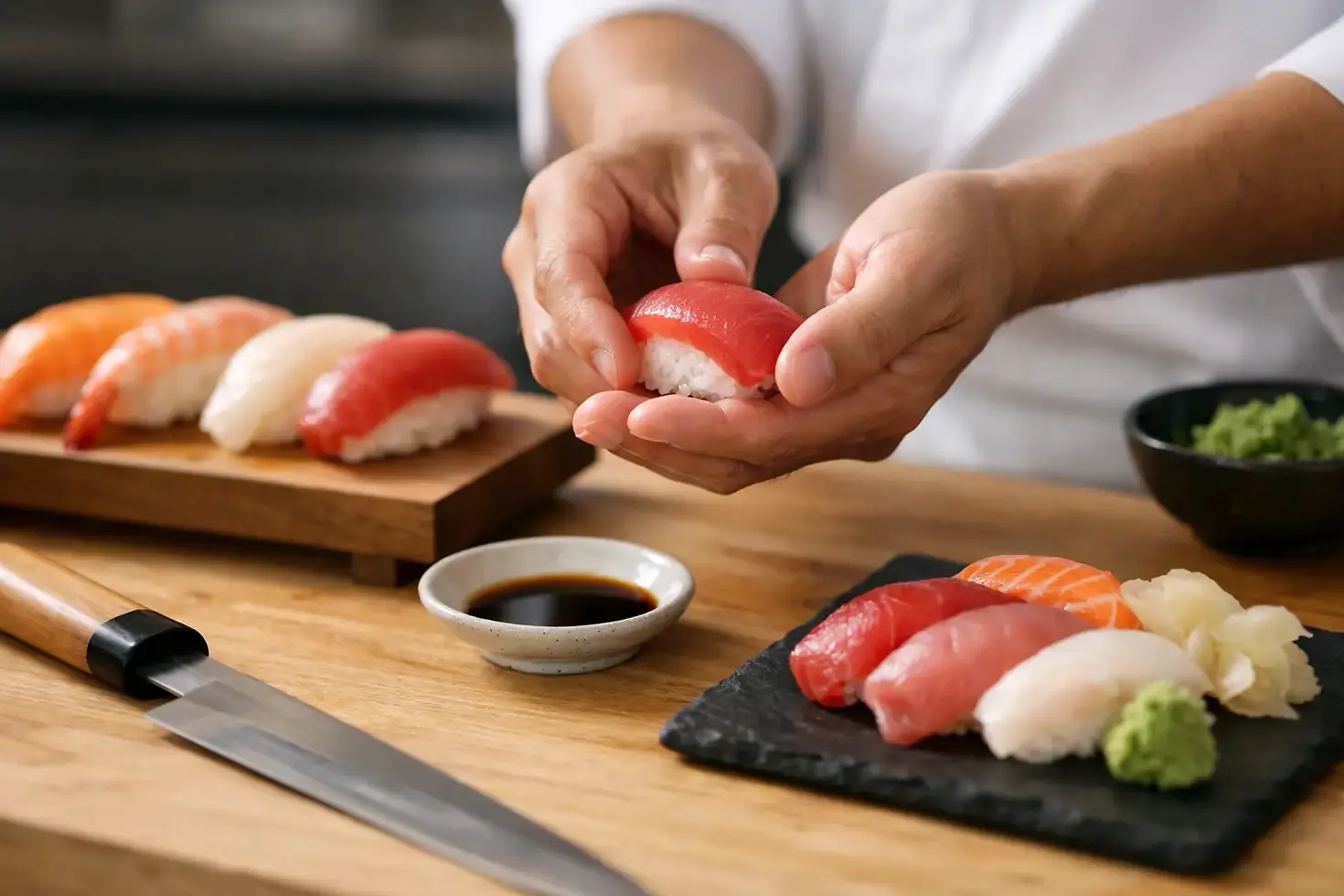
Nigiri may be the clearest expression of craftsmanship because there is so little room for distraction. Rice, fish, seasoning, and form must all speak in one voice.
A well-made nigiri should feel light, but not fragile. It should carry enough structure to be lifted, yet dissolve with grace once eaten. This depends on shaping technique known informally as the chef’s hand pressure and rhythm. The movement is economical, almost quiet, and it is repeated hundreds of times until it becomes instinct.
Even the space inside the rice matters. Expert shaping creates a subtle interior looseness so the grains are not compressed into a solid mass. That little pocket of air contributes to tenderness. It is one of the reasons expertly made nigiri feels so different from a version that appears similar at first glance.
Balance is more important than abundance
In premium dining, generosity does not always mean size. An oversized piece can overwhelm the mouth and blur the intended balance. Smaller, proportionate nigiri often delivers a more refined experience because every component arrives at once. The rice seasons the fish, the fish perfumes the rice, and the bite resolves cleanly.
Timing and temperature are part of the craft
Sushi is often described through ingredients, but timing may be just as important. A piece served moments too early or too late can lose its ideal texture. Rice cools. Fat stiffens. Seaweed softens. Condensation changes the surface. Precision is not only in preparation, but in release.
This is why omakase and chef-led sushi service feel so intimate. The chef is not simply presenting food. He or she is choosing the exact moment when that piece is most alive. In a destination dining environment, that immediacy adds to the sensory journey. The guest is not receiving a static dish, but participating in a fleeting, carefully judged experience.
Temperature also creates contrast. Cool fish over gently warm rice is a classic example, but there are many nuances within that relationship. Some brushed sauces are best slightly warmer to bloom aromatics. Some seared toppings need a narrow service window so warmth enhances richness without cooking through the texture. Good sushi often feels effortless because these decisions happen invisibly.
Restraint is one of the highest sushi craftsmanship techniques
Luxury can tempt excess. More toppings, more sauce, more garnish, more drama. Yet one of the most refined sushi craftsmanship techniques is knowing when to stop.
A touch of nikiri can sharpen sweetness in shellfish or deepen savoriness in tuna. A whisper of citrus can brighten a richer bite. Fresh wasabi can create lift and fragrance that disappear quickly rather than lingering as blunt heat. But every addition needs purpose. Too much adornment can flatten the ingredient rather than elevate it.
This principle matters even more in Nikkei cuisine, where Japanese discipline meets the vibrant energy of Peruvian flavor. The combination can be thrilling, but only when balance leads. Acid, spice, sweetness, and smoke should complement the fish and rice, not compete with them. When handled with care, this fusion feels expressive and precise at once.
That tension between purity and personality is part of what makes contemporary sushi so compelling. Tradition offers structure. Creativity offers surprise. The art lies in knowing how far to move in either direction.
Why craftsmanship changes the dining experience
When guests speak about unforgettable sushi, they often describe a feeling before they describe a dish. They remember how polished the bite felt, how each course seemed measured to the moment, how the meal held both discipline and soul. Craftsmanship creates that memory.
It also deepens trust. In an upscale setting, diners want to feel that every detail has been considered, from the temperature of the rice to the pacing of the service. That confidence allows the evening to unfold with ease. You stop analyzing and start savoring.
At KŌYΛ Antigua, that philosophy resonates naturally within a dining experience shaped by precision, atmosphere, and emotional connection. Sushi is not treated as a trend piece or a visual accessory. It becomes part of a broader story about artistry, hospitality, and the pleasures of a table where every element has intention.
For anyone drawn to refined dining, learning to notice these details adds another layer of enjoyment. You do not need to speak the language of a sushi counter fluently to recognize care. You can feel it in the tenderness of the rice, the exactness of the cut, the restraint of the seasoning, and the calm confidence of the whole composition. The next time a piece of sushi seems to disappear almost the instant it reaches your palate, that is not simplicity. That is craft, practiced until it feels like grace.


Comments