_edited.png)
How to Choose Sushi Omakase for a Special Evening
- Arenzo Infotech

- Aug 4
- 5 min read
The most memorable omakase meals begin before the first piece of sushi reaches the counter. Knowing how to choose sushi omakase means choosing more than a menu: you are selecting a chef’s point of view, a pace for the evening, and an atmosphere that makes every course feel considered.
Omakase translates loosely to “I leave it up to you.” In practice, it is an invitation to trust the chef with the progression of your meal. That trust is best placed where craftsmanship, hospitality, and your own idea of a special night are in harmony.
Begin With the Experience You Want
Not every omakase is intended to feel the same. A traditional sushi counter may center on Edomae technique, with restrained seasoning, impeccable fish, warm rice, and an intimate exchange with the itamae, or sushi chef. A contemporary experience may introduce smoke, citrus, spice, local produce, or unexpected textures. Neither is inherently better. The right choice depends on what you hope to feel at the table.
For a quiet anniversary, a small counter with a measured, chef-led rhythm can be especially compelling. For a celebratory evening with friends, look for a setting where the energy, cocktails, and wider dining room bring a little more theater. Travelers seeking a sense of place may prefer a chef who works with regional ingredients rather than reproducing a menu that could be found anywhere.
At a destination such as Antigua, this can mean a sushi experience shaped by the island’s brightness and abundance. At KŌYΛ, Japanese precision meets Peruvian flavor and Caribbean soul, creating a more expansive interpretation of the omakase spirit. The question is not whether innovation belongs in sushi. It is whether the chef’s choices feel purposeful and balanced.
How to Choose Sushi Omakase by Chef Style
A strong omakase tells a story through contrast and progression. Early bites may be delicate and clean, followed by richer fish, lightly charred elements, hand rolls, or a composed final course. The chef should understand when to let pristine seafood speak quietly and when to introduce acidity, heat, or umami for a more expressive moment.
Before reserving, consider the restaurant’s culinary identity. If you love pristine nigiri with subtle variations in soy, salt, and citrus, seek an experience rooted in classic sushi tradition. If you are drawn to bolder flavors, ceviche, yuzu, ají, truffle, or robata-charred seafood, a Nikkei or contemporary Japanese omakase may suit you better.
Seasonality matters as much as style. The finest omakase menus are not fixed scripts. They respond to what is exceptional that day, whether it is pristine tuna, sweet shrimp, silky scallop, uni, or local catch treated with respect. A restaurant that speaks about changing selections and chef discretion is usually signaling that the meal follows the market rather than forcing ingredients into a predetermined format.
Look for Restraint, Not Excess
Luxury does not require every course to arrive crowned with gold leaf, truffle, or caviar. Those ingredients can be beautiful when they serve the dish, but they should not distract from the fish, rice, and knife work. A memorable omakase feels edited. Every garnish, sauce, and temperature shift has a reason to be there.
Pay attention to how a restaurant describes its food. Language that emphasizes sourcing, seasonality, technique, and the chef’s daily selection often suggests thoughtful craft. Descriptions focused only on spectacle may still promise a lively night, but may be less suited to diners who want sushi at the center of the experience.
Consider the Counter, the Table, and the Pace
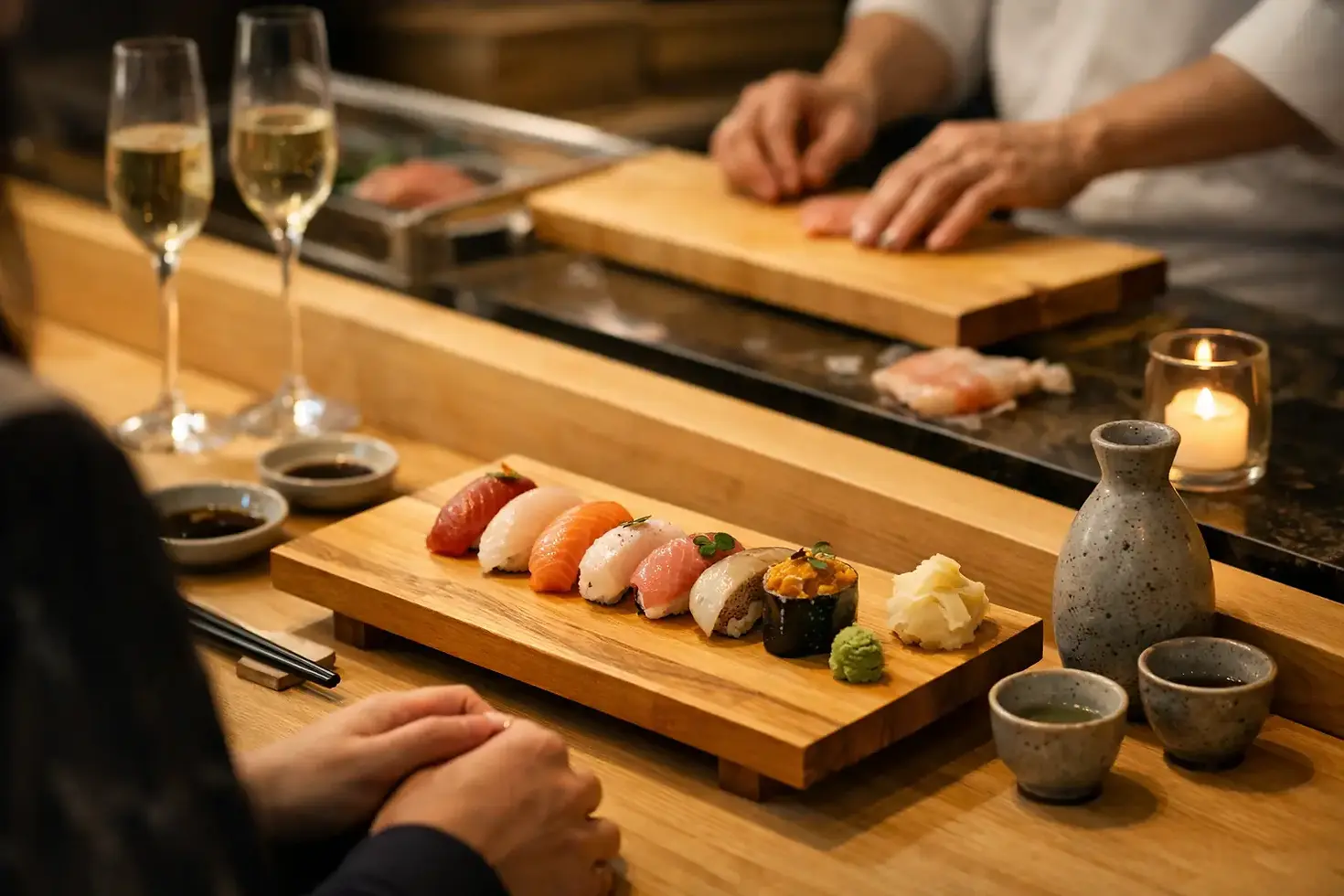
Where you sit changes the character of the evening. Counter seating offers the closest connection to the chef’s work. You can see the rice shaped by hand, hear the subtle crackle of a torch, and receive each piece at the intended temperature. It is ideal for curious diners, couples, and anyone who enjoys a more personal culinary conversation.
Table seating offers privacy and ease, particularly for a group or a celebration where conversation matters as much as the food. Some restaurants provide the same omakase at both, while others reserve the full chef-led ritual for the counter. Ask when you book, especially if the occasion calls for a particular mood.
Pacing deserves equal consideration. A concise omakase might be perfect before an evening in English Harbour, while a longer tasting can become the night’s main event. There is no need to choose the most extensive format simply because it appears more exclusive. The better choice is the one that leaves space to savor rather than rush.
Match the Price to What You Value
Omakase pricing reflects more than the number of courses. It can include the rarity of the seafood, the skill required to prepare it, the cost of flying in ingredients, the intimacy of the seating, and the level of service surrounding the meal. A higher price does not guarantee a better experience, but exceptionally fresh ingredients and a focused chef-to-guest ratio rarely come without investment.
Look beyond the headline price. Find out whether the menu is a set number of courses, whether beverages are separate, and whether supplements such as uni, caviar, or premium sake are offered during service. A clear understanding of the structure lets you relax into the meal without unnecessary surprises at the end of the evening.
For some diners, the best value is a traditional sushi-focused format. For others, it is a broader sensory journey that includes Nikkei small plates, sashimi, grilled seafood, and carefully paired cocktails or sake. Decide which kind of indulgence feels most worthwhile to you.
Be Clear About Dietary Needs Before You Reserve
Omakase is built on trust, and good communication is part of that trust. If you have an allergy, pregnancy-related restriction, aversion, or dietary preference, share it when making the reservation, not after the first course arrives. Raw seafood, shellfish, soy, sesame, and alcohol-based seasonings can appear throughout a sushi tasting, and substitutions may be limited when a chef has designed a tightly paced menu.
A capable restaurant will tell you honestly what can be accommodated. Flexibility is a sign of thoughtful hospitality, but it is reasonable for a chef to say that certain restrictions prevent them from delivering the intended omakase experience. In that case, an à la carte meal or another tasting format may be the more satisfying choice.
If you are simply new to sushi, do not let unfamiliarity keep you away. Let the team know that you prefer milder flavors or are hesitant about certain textures. The best guidance is warm rather than intimidating, and a skilled chef can introduce more adventurous bites at a pace that feels inviting.
Know What to Ask Before Booking
A few well-chosen questions can reveal whether the experience fits your evening. Ask how long the meal typically lasts, whether counter seating is available, and whether the menu is predominantly nigiri or includes composed dishes. If a celebratory occasion is involved, ask about the atmosphere rather than assuming every fine dining room feels hushed.
It is also helpful to ask whether the menu changes regularly and how dietary requests are handled. These questions are not fussy. They show that you want to arrive ready to enjoy the chef’s work, while giving the restaurant the information needed to host you well.
Come Ready to Follow the Chef’s Lead
Once you are seated, allow the meal to unfold. Sushi is often served one piece at a time for a reason: temperature, texture, and seasoning are calibrated for that exact moment. Eat each piece soon after it is placed before you, and taste it first as prepared. Additional soy sauce or wasabi may not be needed.
Curiosity is always welcome. Ask about an unfamiliar fish, a Peruvian chile, or a sake pairing that catches your attention. Omakase is not an exam in etiquette. It is a conversation between ingredient, chef, and guest.
Choose the omakase that makes you feel both anticipated and at ease. When the setting is right, the chef has something genuine to say, and the evening has room to linger, every course becomes part of a memory worth returning to.


Comments